11.2.11

Messenger Bags and Why I hate Velcro

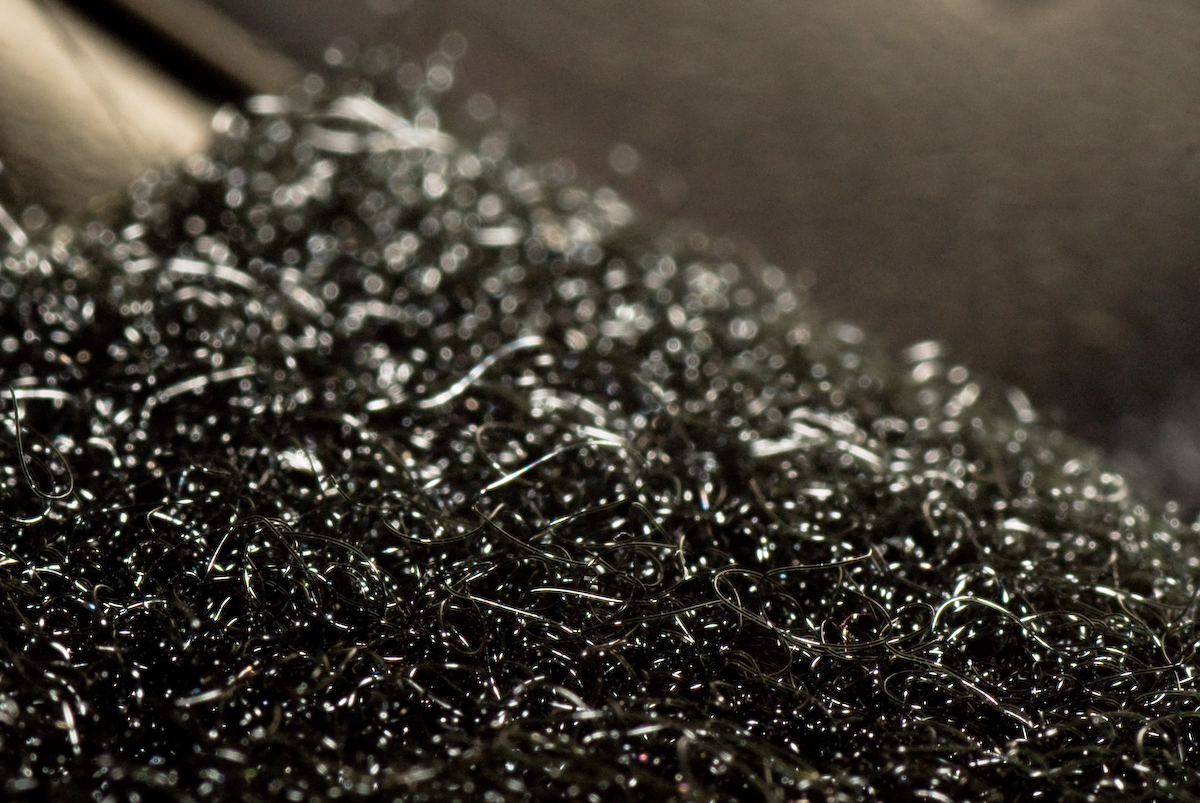
Image provided by Icefreez on Flickr

If you cannot tell by the name of this article I have a sort of love/hate relationship with everyone's favorite temporary adhesive: Velcro (restricted damnit). I promise I will try to find a way to bend this little rant back into the design sphere.

So recently I decided to purchase a new messenger bag. My current bag and I have a long relationship that began in a fluorescent lit big-box store. It was a long and adventurous relationship that lasted many long hours at the coffee shop, multiple trips across the states, and even a bike accident which resulted in egg yolks and flour forming a pie like shell in the basin of my burlap bag.

But alas, like all good relationships that one must come to an end. The strap is beginning to remove itself from the bag, and fearing the threat of my macbook dropping off my shoulder during a bike ride, I decided to buy a new bag.

Thus the rant begins.


I decided to get a Crumplr bag and though I think their designs are good (as well as the website) I have to say I am dissapointed in the end product. Let me be clear about this review, I do not think the end product is bad, it is fairly good quality, balances well on the bike and is fairly distinctive in design. BUT, what is the deal with all the damn velcro? I have seen this trend in using velcro in many different products and I honestly don't understand it. If someone gets a thrill out of the nerve-wrenching sound that comes from ripping two pieces asunder, then please let me know.

I view velcro in product design like the use of hot-glue in crafting. Somehow velcro transcends its role as a craft making assistant, but the amateur (and dangerous) hot glue must be content with bejewling and making toothpick bridges. Why is the one adhesive that screams tacky and poor craft used in the market while the other waits patiently in the craft drawer?

There really is no need for the little fuzzy squares of hooks and loops. With good design you can insure that the individual compartments in your bag keep their contents safe and secure. Why is the extra lock essential? Do we have velcro for our jean pockets? Is their a lock on your shower curtains? Do you like to sign in a code every time you use your iPhone? Why do we need extra barriers between us and what we need?

Upon reconsideration I really wish that I had bought a badass Chrome bag, or even modified a cheap Rothco model. But now I am stuck with this crackly, inaccessible bag that will soon be modified. I have already made a list of all the things that will be removed and/or replaced. I think the end result will turn out well as the function increases and the frustration decreases.

So can I get some opinions on this subject. A bag is a very personal and unique extension of your personality and design perspective. What do you look for in a bag?


7.2.11

Should I Work for Free?

Should I Work For Free

For all of the fellow designers that find themselves trapped into completing free work, please consult this handy digram to measure the value of that possible work. I discovered this handy graphic off of this list compiled by Smashing Magazine.

Smashing Magazine Article

I love the reasoning of this diagram but the nerdy developer in me is crazy about the amount of work that went into making this thing with pure HTML and CSS. If you understand code then check out her source and be amazed by her incredulous control over absolute positioning.

Jessica Hische

3.2.11

EDWARD TUFTE

Edward Tufte - the Leonardo of Information . . . APRIL 6th 2011


He comes to Austin just about every year and gives a full day lecture on his work and theories. There is a discounted rate if you purchase tickets in groups of 10 or more. If anyone is interested in going to this please respond in the comments section. I'd be willing to save up to bankroll the purchase if I can receive paypal payment and confirmation immediately after.

This should be a must go to for all architects or aspiring architects/designers.

2.2.11

Behance Cometh

Seaholm Power Plant Proposal

Hey guys. Sorry for being gone for a bit but now I am back. I saw that Worm posted about some awesome social portfolio networks and I highly encourage everyone to join up. Behance is super sweet and has a great healthy network of like-minded designers that have some truly sick work up. I set up an account, check out a project here

Also Dribble is pretty sweet though you need an invite to participate.

Also I have discussed this idea with Jeff and Worm, but I would like to see how everyone else feels about it. I propose that we move the blog to a more friendly and easier to use engine. Namely Wordpress. I know Jeff already has experience using the CMS engine and I am sure he can attest at the superior capabilities of that client. In that process I would like to redesign the look and feel of the site as well as the imagery. If anyone has any ideas for a new logo or color scheme then please post some ideas.

Anyway let's keep up the killer work.

31.1.11

Chop Shop Studio

Second Year Design Studio, Texas Tech University, [Prof. Jeff S Nesbit]
Studio Blog Here
Objects and their specific properties define how that object operates, performs, defines voids, defines solids, and decays. In this studio we borrow the inherent properties of specific automobile parts in order to begin a discussion of understanding formal capacities and internal ‘haecciety’ of part to whole relationships. This intensive studio goes through various phases which do not operate on a linear sequence but an iterative dialogue between one set of exercises to another. Each section is a direct response to the critical objectives through strict explorations of form, space, constructs, orders, capacities and fields. [Work shown by J. Venter, J. Charbonneau, S. Bunt, D. Budke]

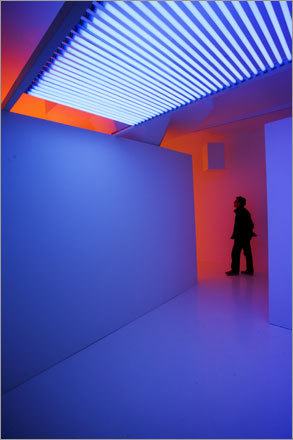
Carlos Cruz-Diez


This semester I am taking a class at the Glassel School of Art at the Museum of Fine Arts Houston. I took an excerpt from our class website. cruzdiezmasterclass.com


The seminar stems from the wishes, concepts and intellectual legacy of Venezuelan artist Carlos Cruz-Diez.  Many of his ideas focus on the innovating and downright revolutionary idea to question the state of dependence of the color to the form. Carlos Cruz-Diez wanted to liberate the Color from its subservient condition to the Form. The color becomes then an event, a random experience subject to the specificity of the viewer’s situation. 


The seminar will be the experimental field in which the students will be asked to elaborate and construct “a Labyrinth of Deconditioning”. The idea of the Labyrinth stems from an unrealized project by Carlos Cruz-Diez in which he visualized several chambers where, upon entering, the spectator’s perceptions would be challenged by an unusual experience. He nonetheless did realized one the chamber with floating colored light which he came to call later the “Chromosaturations”. It was first constructed in Paris in 1969 under the name “Labyrinth for a Public Place”. 


The class coincides with a full exhibition of Cruz-Diez's work at the Museum of Fine Arts Houston. The show opens on February 5th.

28.1.11

Fetish Systems

New book by my friend, Raafat, from Beirut, Lebanon. Haven't read it yet but should be a good one based off his conversation and skills of sarcasm. get it [ here ]

But Does It Float: Blog

But Does It Float Found this nice blog a week or so ago . . . definitely some nice collections neatly organized . . .

25.1.11

Fractals in Three Dimensional Motion

I hope you guys enjoy these little animations. 


SantaMonica: Legitmate Wear


SantaMonica Like their style . . .