23.2.11

Private vs. Public


I have been attempting to wrap my head around the questions and suppositions that were raised by marQueso in his post about the nature of privacy on the internet. This topic is super dense and expansive and I am staring at an intimidating list of references and articles that touch upon multiple aspects of net neutrality and web privacy.

A simple analog would be the current debate and reaction over the privacy options that Facebook has been (trying) to implement. This is an interesting case and I believe has undertones that relate to marQueso's ideas. Can you really be upset that your sense of privacy is threatened when you are voluntary exposing yourself to a community? In a real life example, would I be upset if my skinny white chicken legs are exposed while taking a swim at the local watering hole?

I may not completely understand the argument on the side of privacy but I think an element of it is how we all engage with the internet. I am referring to the actual action of engagement which includes the atmosphere and setting that the author exists in while he/she interacts with the internet. The majority of participants on online communities are inputting and engaging while sitting alone at home/work/cafe. Maybe the common understanding is that if your physical presence is alone and private while engaging, then the digital avatar should also be under that umbrella of privacy and anonymity.

Maybe this is also why the Farnsworth house was a failure for the client. In a certain setting assumptions are made about your level of exposure and the setting of the home means ultimate privacy. Innovations such as drapes, blinds, tinted glass, etc. have become necessities in order to separate your home from the outside world. I think marQueso is following an important thread here. If the internet is a whole new world of multi-linking, intertwining and reflective communities, then why should it be constrained by the same tenants of our reality.

Maybe the web should really exist as a world of complete transparency. A democratic utopia that is kept in check due to the infinite amount of eyes watching, scanning and surveying all the parcels of information that are freely floating back and forth.

Unluckily, I believe this post has degenerated into a bit of a ramble but I encourage someone else to pick up these pieces and run with it in a new direction.

Question:

Is your online identity separate, analogous or completely opposite of your actual identity? If so then how and why?

19.2.11

El Interneto Para Todos

Currently writing my essay for graduate school applications. I am tasked with writing about three master's thesis topics that interest me and why. I can only come up with two so i am thinking of just talking about some ideas that i have been thinking of for the last few months. Below is a paragraph I am kind of on the fence about. Some feedback would be appreciated, even if you think its a crazy idea, I would like to know why.


"The internet has led our society towards new paths thought impossible in the span of just half of one lifetime. Unlike television of the 20th century the internet functions through the interactivity. This has lead to new frontiers for our society to explore and has lead to exponential growths in almost every facet of life. In a response reflective of human nature, we have decided that this new power be watched and regulated. This has led to groups of people recording and monitoring our interactions with unbridled access. They also have the power to turn off the web through rules that they have written. What do we gain, and what do we lose from allowing only a select few to have free access to our most intimate information? It is with this question that I propose the idea of a completely free and transparent internet to all. Every image, web site, and email would be available to see and record, with completely equal access. In a sense we could strip the internet of its anonymity. What would be of the internet if we were cognitive of the level of privacy that we truly have? What would people do to regain that  sense of privacy? How would our interaction change as we use the internet to access information, but most importantly how would our interactions change when we are out of this cyberspace? I would like to use these questions as a starting point for a new discussion about how we use this machine and the effect it has on our lives.  Until we reach an equilibrium with this creation we must continue asking questions until we find an order." 


I guess most obviously is that it has nothing to do with architecture. Can any of you guys think of how it can, or if it even matters?

Thanks,

12.2.11

Eliasson Rap

A must see Olafur Eliasson Rap

11.2.11

The work of Olafur Eliasson

In my on going studies with Carlos Cruz-Diez' work I wanted to showcase a few other artists that have been involved with the kinetic art movement.

Olafur Eliasson's bio from ted.com:

Denmark-born Icelander Olafur Eliasson has taken the art world by storm -- and the meteorological dimensions of that statement are appropriate. His immensely popular The Weather Project, at London's Tate Museum, immersed spectators in an artificial mirrored environment with its own looming sun (and its own analog of London fog), and attracted 2 million visitors in the process. In the summer of 2008, his four massive waterfalls spectacularly punctuated key sites in New York's harbor -- including one pouring from beneath the Brooklyn Bridge.

Eliasson's works emphasize tricks of light, refraction and scale, and tend to involve each viewer in his or her own unique experience, as in Beauty, which, by passing light through a wall of fine mist, produces a different rainbow when viewed from different points in the gallery. And his works engage passers-by in urban environments -- Eye See You, a project for Louis Vuitton (and meant to publicize 121 Ethiopia, an African nonprofit Eliasson co-founded with his wife), grabs viewers in the street with a beam of light shot from the window by an eye-shaped lamp.

"Many of his best-known works explore architecture and the mechanics of perception, almost as if the fantastical imaginings of Buckminster Fuller were reinterpreted by a cognitive scientist."
~Michael Joseph Gross, New York magazine


http://www.olafureliasson.net


You're making things explicit. 2009


The weather project. 2003


Messenger Bags and Why I hate Velcro

Image provided by Icefreez on Flickr

If you cannot tell by the name of this article I have a sort of love/hate relationship with everyone's favorite temporary adhesive: Velcro (restricted damnit). I promise I will try to find a way to bend this little rant back into the design sphere.

So recently I decided to purchase a new messenger bag. My current bag and I have a long relationship that began in a fluorescent lit big-box store. It was a long and adventurous relationship that lasted many long hours at the coffee shop, multiple trips across the states, and even a bike accident which resulted in egg yolks and flour forming a pie like shell in the basin of my burlap bag.

But alas, like all good relationships that one must come to an end. The strap is beginning to remove itself from the bag, and fearing the threat of my macbook dropping off my shoulder during a bike ride, I decided to buy a new bag.

Thus the rant begins.


I decided to get a Crumplr bag and though I think their designs are good (as well as the website) I have to say I am dissapointed in the end product. Let me be clear about this review, I do not think the end product is bad, it is fairly good quality, balances well on the bike and is fairly distinctive in design. BUT, what is the deal with all the damn velcro? I have seen this trend in using velcro in many different products and I honestly don't understand it. If someone gets a thrill out of the nerve-wrenching sound that comes from ripping two pieces asunder, then please let me know.

I view velcro in product design like the use of hot-glue in crafting. Somehow velcro transcends its role as a craft making assistant, but the amateur (and dangerous) hot glue must be content with bejewling and making toothpick bridges. Why is the one adhesive that screams tacky and poor craft used in the market while the other waits patiently in the craft drawer?

There really is no need for the little fuzzy squares of hooks and loops. With good design you can insure that the individual compartments in your bag keep their contents safe and secure. Why is the extra lock essential? Do we have velcro for our jean pockets? Is their a lock on your shower curtains? Do you like to sign in a code every time you use your iPhone? Why do we need extra barriers between us and what we need?

Upon reconsideration I really wish that I had bought a badass Chrome bag, or even modified a cheap Rothco model. But now I am stuck with this crackly, inaccessible bag that will soon be modified. I have already made a list of all the things that will be removed and/or replaced. I think the end result will turn out well as the function increases and the frustration decreases.

So can I get some opinions on this subject. A bag is a very personal and unique extension of your personality and design perspective. What do you look for in a bag?

7.2.11

Should I Work for Free?

Should I Work For Free

For all of the fellow designers that find themselves trapped into completing free work, please consult this handy digram to measure the value of that possible work. I discovered this handy graphic off of this list compiled by Smashing Magazine.

Smashing Magazine Article

I love the reasoning of this diagram but the nerdy developer in me is crazy about the amount of work that went into making this thing with pure HTML and CSS. If you understand code then check out her source and be amazed by her incredulous control over absolute positioning.

Jessica Hische

3.2.11

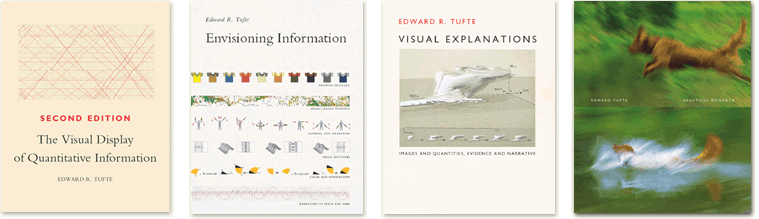
EDWARD TUFTE

Edward Tufte - the Leonardo of Information . . . APRIL 6th 2011


He comes to Austin just about every year and gives a full day lecture on his work and theories. There is a discounted rate if you purchase tickets in groups of 10 or more. If anyone is interested in going to this please respond in the comments section. I'd be willing to save up to bankroll the purchase if I can receive paypal payment and confirmation immediately after.

This should be a must go to for all architects or aspiring architects/designers.

2.2.11

Behance Cometh

Seaholm Power Plant Proposal

Hey guys. Sorry for being gone for a bit but now I am back. I saw that Worm posted about some awesome social portfolio networks and I highly encourage everyone to join up. Behance is super sweet and has a great healthy network of like-minded designers that have some truly sick work up. I set up an account, check out a project here

Also Dribble is pretty sweet though you need an invite to participate.

Also I have discussed this idea with Jeff and Worm, but I would like to see how everyone else feels about it. I propose that we move the blog to a more friendly and easier to use engine. Namely Wordpress. I know Jeff already has experience using the CMS engine and I am sure he can attest at the superior capabilities of that client. In that process I would like to redesign the look and feel of the site as well as the imagery. If anyone has any ideas for a new logo or color scheme then please post some ideas.

Anyway let's keep up the killer work.

31.1.11

Chop Shop Studio

Second Year Design Studio, Texas Tech University, [Prof. Jeff S Nesbit]
Studio Blog Here
Objects and their specific properties define how that object operates, performs, defines voids, defines solids, and decays. In this studio we borrow the inherent properties of specific automobile parts in order to begin a discussion of understanding formal capacities and internal ‘haecciety’ of part to whole relationships. This intensive studio goes through various phases which do not operate on a linear sequence but an iterative dialogue between one set of exercises to another. Each section is a direct response to the critical objectives through strict explorations of form, space, constructs, orders, capacities and fields. [Work shown by J. Venter, J. Charbonneau, S. Bunt, D. Budke]

Carlos Cruz-Diez


This semester I am taking a class at the Glassel School of Art at the Museum of Fine Arts Houston. I took an excerpt from our class website. cruzdiezmasterclass.com


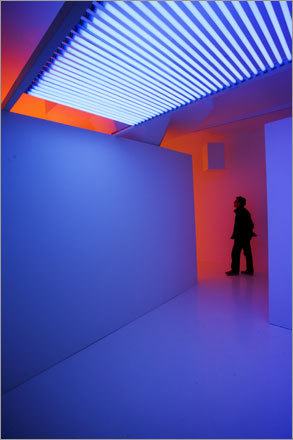
The seminar stems from the wishes, concepts and intellectual legacy of Venezuelan artist Carlos Cruz-Diez.  Many of his ideas focus on the innovating and downright revolutionary idea to question the state of dependence of the color to the form. Carlos Cruz-Diez wanted to liberate the Color from its subservient condition to the Form. The color becomes then an event, a random experience subject to the specificity of the viewer’s situation. 


The seminar will be the experimental field in which the students will be asked to elaborate and construct “a Labyrinth of Deconditioning”. The idea of the Labyrinth stems from an unrealized project by Carlos Cruz-Diez in which he visualized several chambers where, upon entering, the spectator’s perceptions would be challenged by an unusual experience. He nonetheless did realized one the chamber with floating colored light which he came to call later the “Chromosaturations”. It was first constructed in Paris in 1969 under the name “Labyrinth for a Public Place”. 


The class coincides with a full exhibition of Cruz-Diez's work at the Museum of Fine Arts Houston. The show opens on February 5th.