
 Via Architectural Record July Issue
14.7.11
25.6.11

2.6.11
The Identity Project
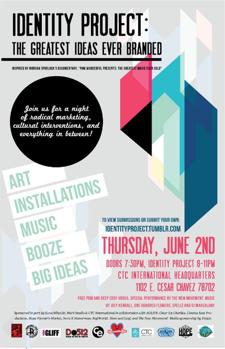 THIS IS A FREE EVENT!! Thursday, June 2nd, @CTC International. The party starts at 7:30PM!
26.5.11
work sketches
 did this little sketch at the office and while it's workstations layouts . . . cubicles . . . i think it has some potential to develop into a sweet series of sketches. what you think?
3.5.11
Wim Crouwel: Total Design

iconographics:wim crouwel
total design - wim's branding and identity company
iconographics short list of world's most iconic graphic designers . . .
wallpaper article on wim crouwel
a poignant figure in design, graphic design, branding and identity - the articles and links say it best!
21.4.11
Infographic on Infographics

So this little chart is of special interest to me at the moment. I am currently working on a little graphic for a client and as a result, I have been swimming amidst the infographic industry a bit more often then usual. Ivan Cash put together a graphic that collects and represents data on graphics that collect and represent data. I do wonder if this experiment could be extended into the abstract to create a beautiful self-referential loop up redundant information. (Like an xref in a xref)
I am also curious if anyone has done any infographic work on the side, or just for fun. I have a few examples on my site (link), but I would love to see some other examples from the BIG.
found via Public School
20.4.11
EUTHANASIA COASTER

This is a really interesting project by designer Julijonas Urbonas. He has been a background in the field of amusement park development that includes a tenure as a managing director of a Lithuanian Theme Park. His current work, influenced by his interested, is self-classified as the realm of "bodily-perceived aesthetics of gravitational theatre."
This project embelisshes and elaborates on this niche field of research with the proposed "Euthansia Coaster". This is best explained by the designer:
“Euthanasia Coaster” is a hypothetic euthanasia machine in the form of a roller coaster, engineered to humanely – with elegance and euphoria – take the life of a human being. Riding the coaster’s track, the rider is subjected to a series of intensive motion elements that induce various unique experiences: from euphoria to thrill, and from tunnel vision to loss of consciousness, and, eventually, death. Thanks to the marriage of the advanced cross-disciplinary research in space medicine, mechanical engineering, material technologies and, of course, gravity, the fatal journey is made pleasing, elegant and meaningful. Celebrating the limits of the human body but also the liberation from the horizontal life, this ‘kinetic sculpture’ is in fact the ultimate roller coaster: John Allen, former president of the famed Philadelphia Toboggan Company, once sad that “the ultimate roller coaster is built when you send out twenty-four people and they all come back dead. This could be done, you know.”
You can read more about the project here: Euthanasia Coaster.
Also be sure to look through the design group at: Design Interactions.
This idea caught my eye because it used architecture/engineering as a direct tool. Instead of housing a space with a specific function or using a structure for a specific purpose, this project is designed with a direct result in mind: pleasurable death. So much more creative then sticking your member into a light socket, this coaster is a bridge that transfers the passenger between states of being. Like a space tether to heaven. I wonder what other kinds of forms could result from this notion of abstract transference or being.
19.4.11
Just Visiting...
 Joshua Nason / Jeff Nesbit / Victoria McReynolds / Daniel Pruske / Dustin White
Just Visiting is an exhibition of work from five Visiting Assistant Professors prior to their arrival in the College of Architecture at Texas Tech University. This exhibition threads the diverse individuality of each professor’s background and trajectory to showcase a momentum of cultivated energy. Through modified timelines, Just Visiting maps previous projects, subjects of inquiry and the various locations inhabited by the visiting professors. Brought together, this features the myriad of ways in which one constructs a life of architecture and contextualizes the temporal nature of now.
See photos here
11.4.11
PeopleFund On Inhabitat

Check out the inhabitat article: PeopleFund
I recall the beginning of this project: an evening conversation with trace paper over pizza at Frank and Angie's. This was the first project I was able to lead with our principal and see the project through all design phases, construction and documentation.
23.2.11
Private vs. Public

I have been attempting to wrap my head around the questions and suppositions that were raised by marQueso in his post about the nature of privacy on the internet. This topic is super dense and expansive and I am staring at an intimidating list of references and articles that touch upon multiple aspects of net neutrality and web privacy.
A simple analog would be the current debate and reaction over the privacy options that Facebook has been (trying) to implement. This is an interesting case and I believe has undertones that relate to marQueso's ideas. Can you really be upset that your sense of privacy is threatened when you are voluntary exposing yourself to a community? In a real life example, would I be upset if my skinny white chicken legs are exposed while taking a swim at the local watering hole?
I may not completely understand the argument on the side of privacy but I think an element of it is how we all engage with the internet. I am referring to the actual action of engagement which includes the atmosphere and setting that the author exists in while he/she interacts with the internet. The majority of participants on online communities are inputting and engaging while sitting alone at home/work/cafe. Maybe the common understanding is that if your physical presence is alone and private while engaging, then the digital avatar should also be under that umbrella of privacy and anonymity.
Maybe this is also why the Farnsworth house was a failure for the client. In a certain setting assumptions are made about your level of exposure and the setting of the home means ultimate privacy. Innovations such as drapes, blinds, tinted glass, etc. have become necessities in order to separate your home from the outside world. I think marQueso is following an important thread here. If the internet is a whole new world of multi-linking, intertwining and reflective communities, then why should it be constrained by the same tenants of our reality.
Maybe the web should really exist as a world of complete transparency. A democratic utopia that is kept in check due to the infinite amount of eyes watching, scanning and surveying all the parcels of information that are freely floating back and forth.
Unluckily, I believe this post has degenerated into a bit of a ramble but I encourage someone else to pick up these pieces and run with it in a new direction.
Question:
Is your online identity separate, analogous or completely opposite of your actual identity? If so then how and why?
Subscribe to:
Posts (Atom)

 Posts
Posts

