
3.6.10

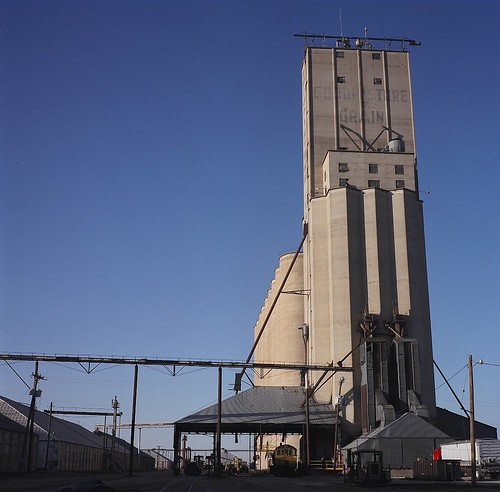
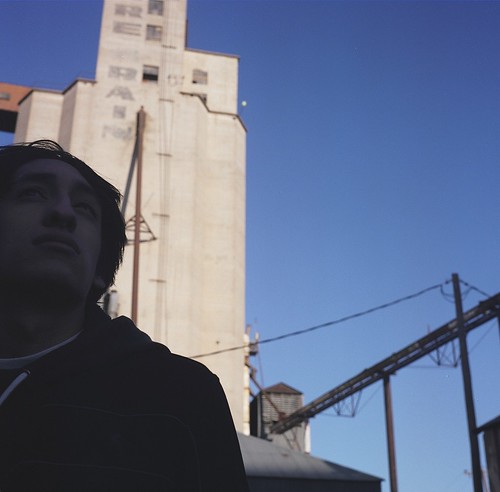
Lubbock Texas Grain Silos - 120mm

Grain Silos of Lubbock, Texas designed by Chalmers & Borton in 1956. these are some of the tallest structures in the city. They rival the height of the Wells Fargo Bank and buildings at Texas Tech University. I dug up a few photos that were taken with my Yoshika 120 gMat. Enjoy these images in all their 120mm glory.


7.5.10

Visuospatial Perception

This is one component of cognitive functioning and it refers to our ability to process and interpret visual information about where objects are in space.

This is an important aspect of cognitive functioning because it is responsible for a wide range of activities of daily living.

For instance, it underlies our ability to move around in an environment and orient ourselves appropriately. Visuospatial perception is also involved in our ability to accurately reach for objects in our visual field and our ability to shift our gaze to different points in space.

The association areas of the visual cortex are separated into 2 major component pathways, and are believed to mediate different aspects of visual cognition. In humans, he parieto-occipital region is believed to process visuospatial and visual motion types of information. Whereas, the inferotemporal region of the brain is believed to mediate our ability to process visual information about the form and color of objects.

http://penta.ufrgs.br/edu/telelab/3/visuospe.htm


In my quest to understand architecture I believe it is first important to understand how architecture is perceived. The key to understanding perception is to understand where it comes from, the brain.

27.4.10

Turner Exhibits

Ever wondered what you'd do instead of going to an architectural firm where you drafted a majority of the time? Well check out a firm that specializes in drawing, crafting, and machining all the cool brainstorms you wanted to put into your projects! Turner Exhibits is that firm. The slayers of dull and drab do-make cool and awesome things happen for designers and architects, notably the firms Anderson-Wise & Olson Sundberg Kundig Allen. The clever use of materials and custom 'kinetic-architecture' makes me jealous and leaves me drooling!

Hot Rod House - Tom Kundig (Architect)


Chicken Point - Olsen Sundberg Kundig Allen (Architects)

19.4.10

Andy Rementer

I found Andy Rementer's Techno Tuesday posts via Public School or The Post Family ... Techno Tuesday is a hilarious short comic posted each Tuesday - they just kept cracking me up. The illustrations are witty and full of expression paired with a sense of wit and irony for our digital habits. crack up here.


12.4.10

Skeleton Row Houses


These townhomes were never finished because of the "Recession" in 2009. The land has changed owners 4 times and the wood has begun to rot. The developers primed over the framing a few weeks ago in an attempt to preserve the structure. I guess they still plan on selling these to a family. I have more ideas I want to pursue so look in the coming weeks for more photographs.

Check them out at the flickr page here: Skeleton Row Houses

Photos By: marQueso

6.4.10

foldable bike

click here to watch a freaking awesome little video on a sweet design of a folding bike!

29.3.10

Pritzker Prize

Rolex Learning Center (© Iwan Baan)

So as most of you probably already know, the Japanese duo Kazuyo Sejima and Ryue Nishizawa are the recipients of this year's prestigious Prizter Prize. If you are unfamiliar with their architecture, now is a great time to catch up on their work, as you will have trouble avoiding it on the interwebs for the next couple of days.

Zollverein School of Management and Design (© Iwan Baan)

I remember my first experience with this group came channeled through Rex's excitement after he visited the glass museum in Toledo. Apparently this place is completely transparent from one side of the building to the other. They cleverly used double layers of glass to create insulating and (I believe) structural walls. If any designers need to be recognized for furthering high clean modernism and rejecting the bombastic tendencies of starchitects, then it is this firm.

a good writeup and interview by NPR

Glass Pavilion at the Toledo Museum of Art (© Iwan Baan)

23.3.10

PeopleFund Steel Erection


This weekend I witnessed the birthing of a project ... glorious! Since 2007 Winter I have been working at Lawrence Group Architects Austin on PeopleFund [see entry 10.25.09] and now the steel is being erected on site. Notice the top right structure appears to cantilever beyond the column grid - in the next week the diagonal bracing will tie back to the second grid of columns creating a suspended hung 'cantilever' (top). I'll keep posting as construction continues ...

17.2.10

...SWINE?


I was passed this photo and have been thinking about it now and again. I chose to post this today in response to conversations I have had recently about where my collaborative is headed and what work will be doing in the next year. Here are some reflections...

'A new generation of workers is entering the workforce at an extremely horrible time in...' alright, we all know the situation... However, there is also a huge change in work ethic of our field. We are increasingly part of a work force that relies on technology to give us access to information, information organization, and visualization techniques. The ability with which we access the information is different from previous generations of architects. Before, catalogs and 'standards' were used as reference materials in firms to guide drafters working at desk stations. Now, we have access to manufacturer models and BIM objects that we do not have to concern ourselves with eighths of inches...

It is time to clear the caches of architectural libraries? I propose we delete the mundane caches of knowledge and move toward using that space to think of new things we can apply our interests towards!

BTW, if you have not seen the movie 'objectified', what are you waiting for?

'Out of the million chairs that have been designed in the world, how could there be an uncomfortable chair?' - Karim Rashid

27.1.10

Pearls

Noted 7.12.2006 Leuven, Belgium

Dr. Buelinckx and I discussed the principles of architecture. Simply, designing spaces fundamentally based on types of structures surrounding the actions of human beings.

Architects should choreograph human movement through spaces. 'Verbs' or actions of humans are most significant because humans are animate beings constantly interacting with one another and with inanimate objects within a space. Engineering tends to base its principles on 'nouns' and objects. It is the job of the architect to determine the type of action and design the space(s) accordingly and then also design the inanimate functional objects within that space. As long as humans are on this planet we are restricted by gravity to movement in the vertical stance and less so in horizontal directions. This means circulation is primarily, if not solely, movement upon a single plane. Design is simple and space becomes complex when one starts manipulating the plane. [MVRDV vs. Le Corbusier]

Hendrika Buelinckx & Jeremy Wahlberg